
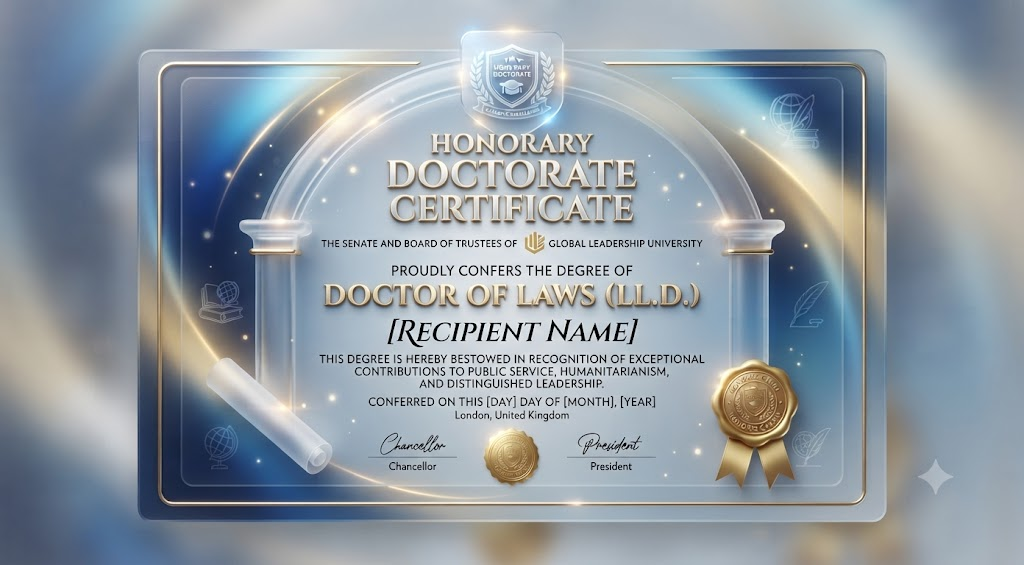
An Honorary Doctorate Certificate is one of the highest forms of recognition awarded to individuals who have made exceptional contributions to society, education, science, business, philanthropy, or the arts. Unlike earned academic degrees, this recognition celebrates achievements, leadership, and lasting impact rather than classroom study or examinations. Universities and academic institutions use honorary awards to acknowledge people whose work has positively influenced communities and industries around the world.
Many professionals, entrepreneurs, artists, and social leaders aspire to receive an honorary distinction because it reflects years of dedication and meaningful accomplishments. While the recognition carries prestige, it also comes with responsibilities. Recipients are expected to continue inspiring others through ethical leadership and public service. Understanding how this award works helps avoid misconceptions and ensures people appreciate its true significance.
What Is an Honorary Doctorate?
An honorary doctorate is a ceremonial academic distinction granted by a recognized institution to honor extraordinary accomplishments. Instead of completing coursework, writing a dissertation, or passing examinations, recipients are selected because of their exceptional influence in a particular field or their contributions to society.
Universities often present honorary degrees during graduation ceremonies alongside students earning traditional qualifications. The award symbolizes respect and appreciation for achievements that align with the institution’s values and mission. Although honorary recipients become part of the university’s distinguished community, the recognition differs from an earned doctoral degree in both purpose and academic requirements.
Understanding an Honorary Doctorate Certificate
An Honorary Doctorate Certificate serves as the official document confirming that an institution has granted the honorary distinction. It usually includes the recipient’s name, the title of the honorary degree, the awarding institution, the date of presentation, and authorized signatures from university officials.
The certificate represents formal recognition rather than academic qualification. It is carefully designed with official seals, high-quality printing, and ceremonial formatting to reflect the prestige of the award. Many recipients proudly display their certificates in offices, educational institutions, or public spaces as symbols of their contributions.
Why Universities Award Honorary Degrees
Universities recognize individuals who have made remarkable contributions beyond traditional academic environments. Their achievements may inspire students, strengthen the institution’s reputation, and encourage innovation in various disciplines. By honoring successful leaders, institutions demonstrate the importance of excellence in every profession.
Recipients may include business executives, humanitarian workers, scientists, educators, authors, musicians, athletes, and community leaders. Each selection highlights outstanding dedication, ethical leadership, and measurable impact that benefits society. These awards also strengthen relationships between universities and influential individuals who support education and research.
Who Can Receive This Recognition?
Eligibility extends to individuals with extraordinary accomplishments rather than academic credentials alone. Successful entrepreneurs who create employment opportunities, researchers making groundbreaking discoveries, artists influencing culture, and philanthropists improving communities may all qualify for consideration.
Leadership, integrity, innovation, and long-term social impact are common qualities evaluated during the selection process. Universities carefully review achievements to ensure recipients reflect their institutional values. The award recognizes sustained excellence instead of temporary popularity or financial success alone.
The Selection Process
Every institution follows its own nomination and approval procedures for honorary awards. Typically, faculty members, university leaders, alumni, or advisory committees nominate deserving candidates. Supporting evidence, including achievements, publications, awards, and community contributions, is thoroughly reviewed.
Selection committees evaluate nominees against strict standards before recommending final candidates to university governing bodies. Once approved, recipients receive formal invitations to attend graduation ceremonies where the honorary distinction is officially presented. This careful process preserves the credibility and prestige associated with honorary recognition.
Difference Between Earned and Honorary Degrees
Many people mistakenly assume honorary degrees are equivalent to academic doctorates earned through years of study. However, important differences exist between these two forms of recognition. Traditional doctoral degrees require coursework, original research, examinations, and dissertation completion under faculty supervision.
An Honorary Doctorate Certificate recognizes exceptional achievements without requiring academic study. While both carry prestige, honorary recipients should not represent themselves as having completed doctoral education unless they have independently earned such qualifications. Understanding this distinction protects academic integrity and public trust.
Benefits of Receiving an Honorary Award
Receiving an honorary distinction offers numerous personal and professional advantages. It publicly validates years of dedication and acknowledges contributions that have created meaningful change. Recognition from respected institutions often enhances credibility, strengthens professional networks, and increases opportunities for public speaking and collaboration.
Recipients frequently become role models for students and emerging professionals seeking inspiration. Their stories demonstrate how commitment, innovation, and perseverance can lead to extraordinary accomplishments. Beyond personal recognition, honorary awards often encourage recipients to continue supporting education, research, and community development.
Can You Use the Doctor Title?
Policies regarding the use of the title “Doctor” vary among institutions and countries. Some universities permit honorary recipients to use the title in ceremonial settings, while others recommend avoiding it in professional contexts to prevent confusion with earned academic or medical qualifications.
Recipients should always follow the guidelines provided by the awarding institution. Transparency and honesty are essential when referencing honorary distinctions in biographies, resumes, or public profiles. Clearly identifying the degree as honorary maintains credibility and respects academic standards.
How to Verify an Honorary Certificate
Verification ensures the authenticity and legitimacy of honorary awards. Individuals should confirm that the awarding institution is recognized and reputable. Official university websites, registrar offices, or accreditation authorities can often verify whether a certificate has been legitimately issued.
Authentic certificates generally contain official seals, signatures, registration details, and institutional identifiers. Prospective employers, organizations, or media representatives may request verification before recognizing honorary distinctions. Taking these steps protects recipients and institutions from fraudulent claims or counterfeit documents.
Common Misconceptions
Several misconceptions surround honorary degrees and certificates. One common belief is that honorary recipients automatically possess academic expertise equivalent to doctoral graduates. In reality, the recognition celebrates achievements rather than academic research or formal education.
Another misunderstanding is that honorary awards can be purchased. Reputable universities never sell honorary distinctions. Legitimate institutions conduct rigorous evaluations before selecting recipients based solely on merit, accomplishments, and contributions to society. Any organization offering honorary degrees for payment without evaluation should be approached with caution.
Displaying the Certificate Professionally
Many recipients choose to frame their honorary certificates and display them in offices, conference rooms, educational institutions, or public spaces. Proper presentation preserves the certificate while highlighting the significance of the achievement. Professional framing also protects the document from environmental damage.
When including the recognition in resumes, websites, or biographies, recipients should accurately describe the award as honorary. This demonstrates professionalism, integrity, and respect for academic conventions. Honest representation strengthens public confidence in both the recipient and the awarding institution.
Maintaining the Value of Honorary Recognition
The prestige of honorary awards depends on ethical practices from both institutions and recipients. Universities must maintain transparent selection procedures and uphold rigorous standards when identifying deserving individuals. Careful evaluation ensures honorary distinctions remain meaningful and respected worldwide.
Recipients also contribute by continuing their positive work, supporting education, mentoring future generations, and promoting responsible leadership. Their ongoing commitment reinforces the values represented by the recognition. When honorary awards are granted thoughtfully and accepted responsibly, they inspire excellence across communities and professions.
Conclusion
An Honorary Doctorate Certificate symbolizes respect, achievement, and lasting contribution rather than academic coursework. It honors individuals whose leadership, innovation, creativity, or service has significantly benefited society. Understanding the purpose of honorary recognition helps distinguish it from earned doctoral qualifications while appreciating its unique value.
As universities continue recognizing remarkable individuals, honorary distinctions remain powerful symbols of excellence and inspiration. Whether awarded to entrepreneurs, educators, artists, scientists, or philanthropists, these certificates celebrate dedication that creates meaningful and lasting change. When granted by reputable institutions and represented honestly, honorary recognition continues to encourage future generations to pursue excellence, serve society, and leave a positive legacy.








Leave a Reply